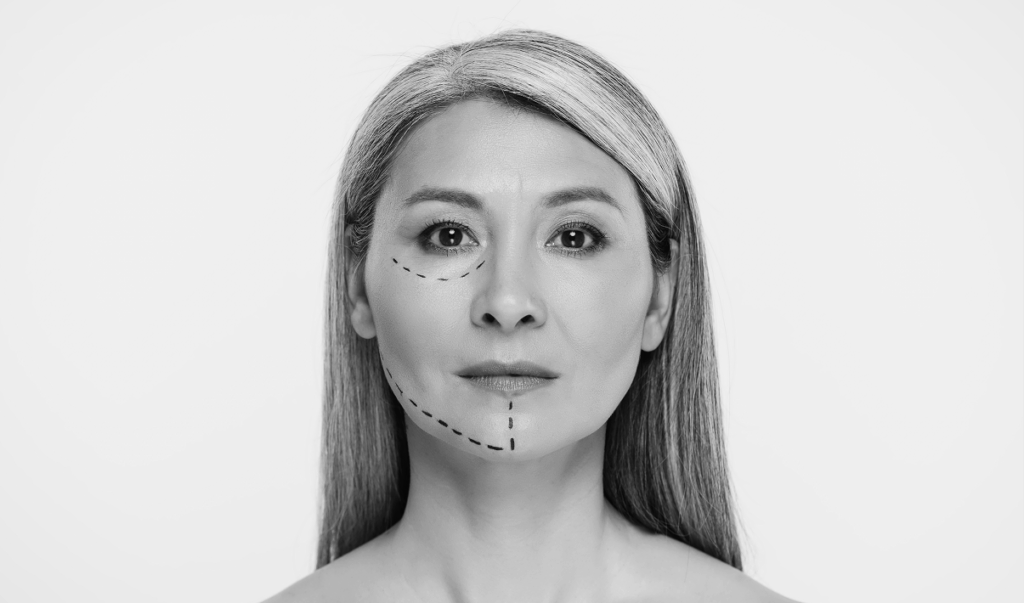
“Is it dangerous? Could something go wrong? What if my face ends up looking different?” These are the three questions we hear most often in consultation when someone is considering eyelid surgery. It’s a completely natural concern: we’re talking about surgery in a delicate area, close to the eye, where a few millimeters can mean the difference between a natural-looking result and one that’s noticeable. The good news is that blepharoplasty is one of the cosmetic surgeries with the best risk-benefit ratio when performed by experienced hands. The not-so-good news: like any surgical intervention, it’s not without risks, and being aware of them is part of true informed consent.
In this article, drawing on more than 25 years of experience in facial surgery, we explain the real risks of eyelid surgery, how often they occur, and the factors that make the difference between a procedure that goes well and one that runs into complications.
Is droopy eyelid surgery complicated? The honest answer

Yes and no. Let’s break it down. From a technical standpoint, eyelid surgery is one of the most demanding procedures in facial surgery: it requires millimetric precision, deep knowledge of periocular anatomy, and the experience to anticipate how each patient will heal. In the hands of a facial surgeon with specific training, the procedure lasts between 60 and 90 minutes, is performed under sedation or local anesthesia, and most patients go home the same day.
From the patient’s perspective, it’s not a painful or dangerous surgery when it’s done well. Serious complications are rare (less than 1% in international statistics), but they do exist. Minor discomforts — bruising, swelling, transient dry eye — are common and form part of the normal healing process; they aren’t true complications.
The variable that changes the equation most is who performs the surgery. The difference in outcomes between a facial surgeon with thousands of blepharoplasties under their belt and one with limited experience is significant. It’s not just about manual skill, but about the ability to make correct intraoperative decisions, anticipate problems, and choose the right technique for each anatomy.
General surgical risks: common to any procedure
Before getting into the specific risks of blepharoplasty, it’s worth remembering that all surgery shares some general risks that, although infrequent, deserve mention:
- Anesthesia reactions. Local anesthesia with sedation has a very high safety profile, but rare allergic reactions are possible. That’s why a pre-anesthetic assessment is always carried out beforehand.
- Intraoperative or postoperative bleeding. It’s controllable and very infrequent when patients follow guidelines (suspending anticoagulants, anti-inflammatories, and supplements that can promote it).
- Wound infection. In an area as well-vascularized as the eyelids, infections are extremely rare (less than 0.5% in most series).
- Reaction to sutures. Some skin types react with redness or small cysts that resolve with basic care.
Specific complications of blepharoplasty
This is where things get more delicate, and also where the difference between surgeons becomes most apparent. These are the complications that can occur specifically in eyelid surgery:
Eyelid asymmetry
Small asymmetries are normal in the first weeks and resolve on their own as swelling subsides. When they persist beyond 3-6 months, they may require a touch-up. It’s the most frequent minor complication.
Dry eye
Some patients experience dryness or a foreign body sensation for weeks or months after surgery. It’s usually transient and treated with artificial tears. In patients with pre-existing dry eye, it’s important to assess this carefully before operating.
Visible scarring
In subciliary blepharoplasty (with an incision below the lash line), the scar is virtually invisible once mature, but it takes months to reach its definitive appearance. In transconjunctival blepharoplasty, there is no external scar. Poor suture technique or inadequate aftercare can leave scars more visible than desired.
Lower eyelid retraction
This is the complication that demands the most respect. When too much skin is removed, or the eyelid isn’t properly supported, it can be left slightly “pulled down,” exposing the sclera (the white of the eye below the iris) or, in extreme cases, causing ectropion. It’s uncommon but technically difficult to correct, which is why prevention is essential.
“Round eye”
The dreaded change from the natural almond shape of the eye to a more rounded form. It appears when the position or support of the lower eyelid is altered. It’s one of the reasons why modern techniques tend to be more conservative: preserving the natural shape of the eye takes priority over removing every minor sign of aging.
Prolonged bruising and edema
While most resolve in 7-14 days, some patients (especially those with thin skin or a tendency to bruise) may take several weeks to recover a normal appearance. It’s not strictly a complication, but it does represent a slower postoperative course.
Diplopia or vision changes
Exceptional but possible: temporary alteration of extraocular muscle motility due to swelling or, very rarely, direct involvement. It almost always resolves in days or weeks with conservative treatment.
Vision loss (extremely rare)
This is the most feared complication, but fortunately its incidence is approximately 1 in every 10,000 procedures according to international series. It’s usually caused by a retrobulbar hematoma compressing the optic nerve, a situation that requires urgent management.
Summary table: frequency and severity of complications
This table, based on international surgical literature and our clinical experience, contextualizes each risk:
| Complication | Frequency | Severity | Reversibility |
|---|---|---|---|
| Bruising and prolonged edema | Frequent (10-20%) | Mild | Spontaneously full |
| Temporary asymmetry | Frequent | Mild | Full within months |
| Transient dry eye | 5-15% | Mild-moderate | High, with treatment |
| Hypertrophic scar | 2-5% | Aesthetic | Treatable with steroids or laser |
| Mild eyelid retraction | 1-3% | Moderate | Usually requires touch-up |
| Ectropion | Less than 1% | Significant | Surgically reversible |
| Infection | Less than 0.5% | Variable | Treatable with antibiotics |
| Persistent diplopia | Very rare | Severe | Usually requires specific treatment |
| Vision loss | ≈1 / 10,000 | Very severe | Requires urgent intervention |
It’s important to read the table with perspective: the vast majority of patients who undergo eyelid surgery experience no significant complications. The numbers exist so the patient can decide with proper information, not to alarm them.
Factors that increase risk
Not all patients start from the same baseline. These are factors worth assessing before surgery, because they raise the likelihood of complications:
- Active smoking. Reduces skin microcirculation and impairs healing. Stopping at least 4 weeks before and after is essential.
- Anticoagulants and antiplatelets. Increase the risk of bleeding. Their suspension must be coordinated with the cardiologist or treating physician.
- Pre-existing dry eye. Tends to worsen with surgery. Worth evaluating with an ophthalmologist before operating.
- Poorly controlled systemic conditions. Diabetes, hypertension, thyroid disorders. Proper stabilization significantly reduces risk.
- Previous surgery in the area. Internal scarring can alter anatomy and complicate the procedure.
- Unrealistic expectations. Although not a medical factor, it’s a “complication” in terms of satisfaction. A thorough pre-op consultation balances expectations with realistic outcomes.
How to minimize the risks: the difference between a well-planned and an improvised surgery

The likelihood of a successful blepharoplasty depends much less on luck than people think. There are concrete decisions that drastically reduce risk:
Choose a facial surgeon with specific eyelid expertise
Not every plastic surgeon performs eyelid surgery with the same frequency. Ask how many blepharoplasties they perform per year and request to see previous cases. Solid experience in facial surgery is the best safety guarantee.
Have a complete preoperative assessment
Full anatomical analysis, study of eyelid dynamics, basic ophthalmological evaluation if appropriate, and a personalized surgical plan. Surgery done with a “one-size-fits-all” protocol is where problems tend to appear.
Opt for conservative techniques
Modern techniques prioritize repositioning tissues over excessive removal of skin or fat. This is what protects the natural shape of the eye and prevents most aesthetic complications in the long term.
Take care of the postoperative period
Cold compresses for the first 48 hours, sleeping with the head elevated, avoiding physical strain for 2-3 weeks, and strict eyelid sun protection for 3 months. Proper postoperative care can make the difference between a standard recovery and a complicated one.
Attend scheduled follow-ups
At 7 days, 1 month, and 3 months. Early detection of any deviation from the normal healing process allows intervention before issues consolidate.
The deciding factor: choosing your surgical team
Of everything covered above, the single factor that most reduces risk is one: choosing the right team to operate on you. An experienced surgeon doesn’t just operate better — they anticipate which patients are ideal candidates and which aren’t, know when to say “this surgery isn’t right for you,” and design the intervention to fit the case, not the protocol.
In our lifting facial Marbella and blepharoplasty projects, we always work with individualized planning and conservative techniques that prioritize the naturalness of the result. Safety and aesthetic outcome go hand in hand: surgery that respects anatomy is, by definition, surgery with fewer risks.
If you’d like to learn more about the procedures we offer and how we approach each case, you can explore the full range of facial aesthetics in Marbella on our website. Every procedure performed at Marbella Facelift follows the same principle: artistic sensibility, technical precision, and honesty with the patient about what surgery can and cannot deliver.
When to postpone or skip surgery: the cases where prudence wins
One of the clearest signs of a serious team is knowing when to say no. Postponing or advising against surgery is the right call in these situations:
- Patient with severe, uncontrolled dry eye.
- Decompensated systemic conditions (thyroid, diabetes, hypertension).
- Anticoagulant therapy that cannot safely be discontinued.
- Clearly unrealistic expectations no result will satisfy.
- Active inflammatory processes or infections in the area.
- Pregnancy or breastfeeding.
Operating in these conditions exponentially increases the risk of complications and, in many cases, fails to deliver the desired result. Serious medicine also means knowing when to wait for the right moment.
Conclusion: a surgery with manageable risks when done well
Returning to the original question: is droopy eyelid surgery complicated? It’s technically demanding, but it’s not a dangerous surgery when performed by an experienced team. The vast majority of patients have a manageable postoperative course and obtain a natural, lasting result. Serious complications are rare and, when they appear, they’re usually linked to factors that could have been identified beforehand.
If you’re considering surgery, the best advice we can give you is this: don’t choose by price, choose by trust. A thorough in-person consultation with a team that takes the time to explain real risks — without minimizing them but without alarming you — is the best assurance that surgery will be a positive experience. The eye area is the most expressive part of the face: it deserves a team that approaches it with judgment and respect.
Frequently asked questions about eyelid surgery
How much downtime do I need after blepharoplasty?
The usual social downtime is 7 to 14 days. Most patients can return to office work after about a week, although mild bruising may remain that can be covered with makeup. For activities involving more public exposure or physical effort, it’s best to wait 2-3 weeks. Full healing takes several months but no longer affects normal life.
Can blepharoplasty be performed under local anesthesia?
Yes, that’s the most common approach. The surgery is performed with local anesthesia plus sedation in most cases, allowing the patient to go home the same day. General anesthesia is reserved for specific cases or when combined with other major facial procedures. This option improves overall safety and speeds up recovery.
Can blepharoplasty be repeated if signs of aging return?
Yes, although it’s rarely necessary. Results from a well-performed blepharoplasty last between 10 and 15 years, and are even definitive in some patients. If new laxity appears over time, a second procedure can be considered, carefully evaluating the remaining tissue to avoid compromising eyelid function. The current trend is to operate conservatively from the first surgery precisely to preserve that possibility.
When are the definitive results visible?
The practically definitive result is seen between 2 and 3 months after surgery, once all the swelling has gone down. The scar, if subciliary, continues to mature until 6-12 months, at which point it reaches its final appearance (virtually invisible if the technique and aftercare have been correct). During those first months, strict sun protection is essential to avoid residual pigmentation.