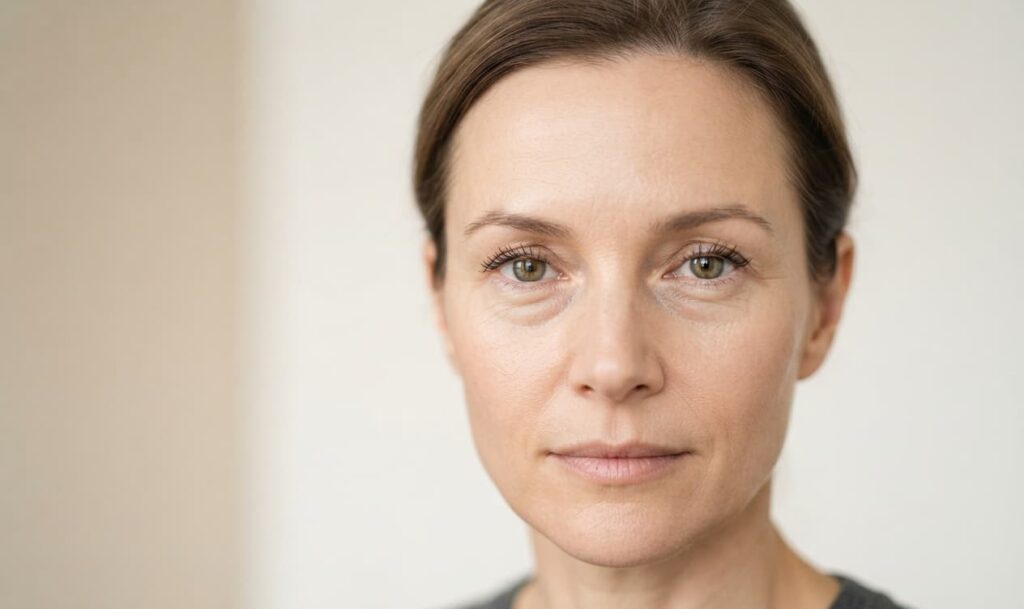
“I’ve been sleeping well for years, I’m not tired, and yet it still looks like I am.” That sentence sums up what many patients tell us in consultation when they come in worried about their under-eye circles. A tired-looking gaze is one of the facial features that most affects our self-perception — and how others see us. But before reaching for creams, hyaluronic acid, or surgery, there’s an essential first step: understanding exactly which type of under-eye circles you have.
In this article, drawing on more than 25 years of experience in facial surgery, we explain the different types of under-eye circles, what causes them, and when blepharoplasty is genuinely the best solution (and when it isn’t).
Types of under-eye circles: why they’re not all the same and why it matters
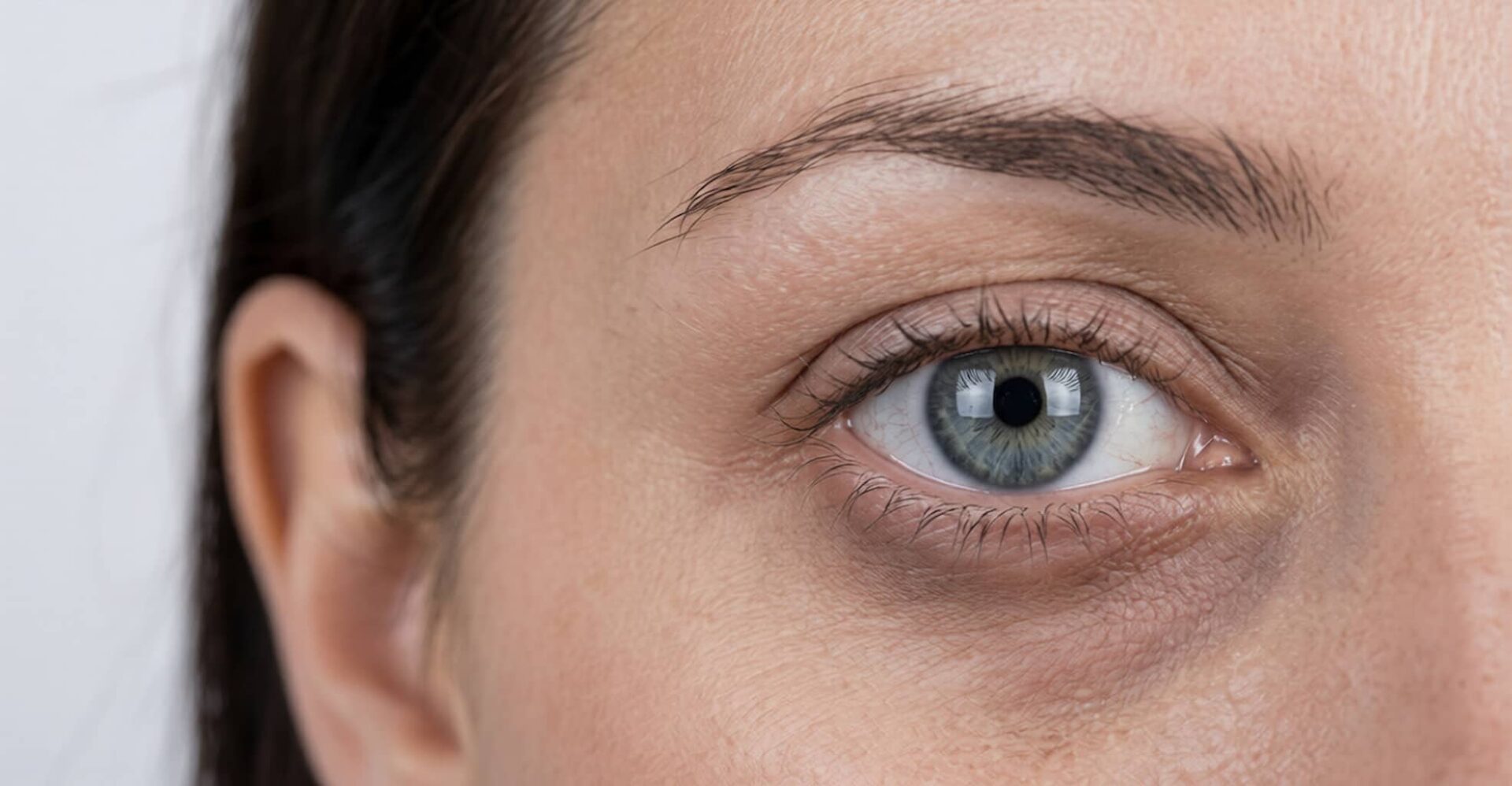
The first common mistake is treating all dark circles as if they were the same thing. They’re not. Some are caused by genetics, others by age-related volume loss, others by the very structure of the eyelid, and others by a combination of all of the above. And here’s the key: each type responds to a different treatment. Applying the wrong treatment to the wrong type is the leading cause of disappointing results in periocular aesthetics.
That’s why, before talking about solutions, it’s worth classifying them properly. Aesthetic medicine and surgery distinguish four major types of under-eye circles, which we detail below.
1. Vascular under-eye circles: the bluish tint beneath the skin
These are the most common, especially in younger people and those with fair skin. They appear because the skin of the lower eyelid is the thinnest in the body (just 0.5 mm) and lets the underlying blood vessels show through. When circulation is sluggish or there’s venous congestion, the bluish or violet color becomes more pronounced.
Factors that worsen them: lack of rest, allergies, chronic nasal congestion, smoking, dehydration. The good news is that they often improve with lifestyle adjustments and non-surgical treatments. The not-so-good news is that genetics play a major role: if your mother and grandmother have them, chances are you will too, no matter what you do.
2. Pigmented under-eye circles: the brown tone
Brown or grayish in color, these are caused by an excess of melanin in the skin of the lower eyelid. They’re more common in people with medium to dark skin types (Mediterranean, Latin, South Asian, East Asian). Sun exposure makes them noticeably worse, and in some cases they’re associated with post-inflammatory hyperpigmentation from dermatitis or chronic rubbing.
Here, the leading treatment isn’t surgical: targeted peels for the periocular area, depigmenting agents with active ingredients safe for this zone, and — above all — strict daily sun protection year-round. Surgery, in this type of circle, doesn’t help on its own.
3. Structural or hollow under-eye circles: the “valley” beneath the eye
These aren’t due to a change in color but to a change in shape. The skin sinks beneath the bony rim, forming a groove — the well-known “tear trough” — that casts a shadow and creates the optical illusion of a dark circle even when the skin isn’t dark. They can be present from a young age due to anatomy, or appear with time due to fat loss and descent of the midface tissue.
This is the type of under-eye circle where the most paradigm shifts have happened in recent years. We used to always treat them by removing fat; today we understand that in many cases the solution lies in repositioning volume rather than extracting it. Properly placed hyaluronic acid works in mild cases; in moderate or severe cases, surgery is the most stable and lasting answer.
4. Mixed under-eye circles: the combination we see most often
The clinical reality is that most patients have mixed under-eye circles: a combination of two or three of the types above. For example, someone with structural bags who also has a pigmented component from sun exposure and visible blood vessels because of thin skin. Treating only one layer when there are three leaves the patient with a partial result.
That’s why a careful clinical diagnosis is the foundation of any serious treatment. Without knowing exactly what you have, no plan will fully work.
Comparison table: types of under-eye circles and most effective treatments
This table summarizes the criteria we apply in consultation to guide each patient toward the most suitable approach:
| Type of circles | Main cause | Most effective treatment | Improves with blepharoplasty? |
|---|---|---|---|
| Vascular (bluish) | Visible vessels, thin skin | Lifestyle, vascular laser, active cosmetics | Only if there’s a structural component |
| Pigmented (brown) | Excess melanin, sun exposure | Depigmenting agents, peels, sun protection | No, unless mixed |
| Mild structural | Volume loss, tear trough | Hyaluronic acid, radiofrequency | Possible if associated with skin laxity |
| Moderate or severe structural | Bags, fat herniation, tissue descent | Lower blepharoplasty | Yes, primary indication |
| Mixed | Combination of causes | Combined plan (surgery + aesthetic medicine + cosmetics) | Yes, as part of the plan |
Blepharoplasty for under-eye circles: when it’s truly the right solution
Blepharoplasty is eyelid surgery. When we talk about under-eye circles, we’re specifically referring to lower blepharoplasty — a procedure that addresses the lower eyelid to correct bags, redistribute fat, remove excess skin, or reposition tissues. It’s the most effective solution when the under-eye circle has a moderate or severe structural component.
There are three situations where lower blepharoplasty makes a clear difference:
- Visible bags with or without shadow underneath. Herniated orbital fat doesn’t respond to creams, massage, or fillers; it requires surgery.
- Deep tear trough combined with skin laxity. When excess skin is also present, hyaluronic acid doesn’t solve the issue and can even worsen it.
- Mixed circles with a strong structural base. Surgery corrects the underlying cause; the other layers can then be treated with less invasive techniques.
The team at Marbella Facelift approaches blepharoplasty from a perspective that prioritizes natural results: it’s not about “erasing” under-eye circles but restoring a harmonious transition between the lower eyelid and the cheekbone, without altering the patient’s natural expression or the character of their gaze.
How the surgery works: current lower blepharoplasty techniques
Today, two main techniques are available, chosen depending on the case:
Transconjunctival blepharoplasty
The approach is made through the inner surface of the eyelid, leaving no visible scar. It allows precise redistribution or removal of the fat in the bags. This is the technique of choice for younger or middle-aged patients without excess skin, and the one with the lowest long-term risk of eyelid retraction.
Subciliary blepharoplasty
The approach uses an incision just below the lash line, virtually invisible once healed. It allows the surgeon to address both fat and excess skin. It’s the indicated technique when there’s significant skin laxity, almost always in patients over 50.
It’s increasingly common to combine blepharoplasty with autologous filling techniques (lipofilling using the patient’s own fat) to reposition volume in the tear trough and the malar area. This combination delivers far more natural and longer-lasting results than the simple “emptying” of bags performed years ago.
Realistic results: what to expect and what not to
Honesty with the patient is part of doing this work properly. These are the reasonable expectations:
- What improves: bags, structural shadows, tired expression, lower eyelid laxity.
- What partially improves: the vascular component when there’s also laxity; fine textures with tired-looking skin.
- What surgery alone doesn’t fix: brown pigmentation, pure violet color without any structural component, post-inflammatory marks.
- What changes for good: the eyelid-to-cheekbone transition. When done well, it’s one of the most natural-looking facial rejuvenations there is.
The procedure lasts between 60 and 90 minutes depending on the technique, is performed under sedation or local anesthesia, and the estimated social recovery is 7 to 14 days, with virtually definitive results at 2-3 months.
Why the team and personalized planning matter
Periocular surgery is one of the most demanding areas of facial surgery: a few millimeters can mean the difference between a natural and an artificial result. Over-correction creates the dreaded “round eye” or eyelid retraction; under-correction leaves the patient just as before, disappointed and with a scar to show for it.
In our lifting facial Marbella and blepharoplasty projects, we always work from individualized planning: full-face analysis, assessment of eyelid dynamics, simulation of results, and selection of the most suitable technique. Every face is different, and every surgery should be designed for that specific face — not by applying a standard protocol.
Beyond eyelid surgery, our team also performs other complementary procedures such as otoplasty in Marbella, facial lifting, lipofilling, and other treatments that can be combined when appropriate to deliver a truly harmonious facial result. Each face is approached as a whole, never as a sum of isolated parts.
Pre- and post-operative care
For optimal results, there’s a care protocol worth respecting:
Before surgery
- Stop smoking at least 3-4 weeks beforehand to improve healing.
- Avoid anti-inflammatories and supplements that increase bleeding (ibuprofen, ginkgo, vitamin E) in the days leading up to surgery.
- Have a basic ophthalmological check if you have dry eye or wear contact lenses.
- Arrive well-rested and well-hydrated.
After surgery
- Apply intermittent cold compresses during the first 48 hours to reduce bruising.
- Keep your head slightly elevated when sleeping during the first nights.
- Avoid physical exertion for 2-3 weeks.
- Strict sun protection of the eyelid for the following 3 months to prevent residual pigmentation.
- Scheduled follow-ups at 7 days, 1 month, and 3 months.
Common mistakes when treating under-eye circles
Four mistakes we frequently see in consultation:
- Using hyaluronic acid when there are real fat bags. It worsens the appearance and creates irregularities that are hard to reverse.
- Assuming any dark circle is pigmentation. Often it’s a shadow cast by a bag, not a stain. Mirror lighting can be deceiving.
- Operating without assessing the rest of the face. An isolated blepharoplasty in a face with widespread descent leaves a partial result.
- Mistaking chronic fatigue for structural circles. If your circles come and go depending on rest, surgery is probably not what you need.
Frequently asked questions about under-eye circles and blepharoplasty
What’s the right age for lower blepharoplasty?
There’s no fixed age. The clinical indication, not the calendar, determines it. In younger patients with prominent bags of genetic origin, transconjunctival blepharoplasty at 30-35 can deliver excellent results. In patients with skin laxity, the indication usually appears between 50 and 65. The assessment is always made by a facial surgeon after analyzing the full case.
How long do blepharoplasty results last?
The results are very long-lasting: between 10 and 15 years for most patients, and even definitive in some cases. The fat that is redistributed or removed doesn’t herniate again the same way. The natural aging process continues, but the surgical change remains very stable over time.
Are there visible scars after blepharoplasty?
With the transconjunctival technique, there’s no external scar, since the approach is made through the eyelid mucosa. With the subciliary approach, the scar is placed just below the lash line and, once mature (between 6 and 12 months), is virtually invisible. The final scar quality depends on the surgeon, the suture technique, and post-operative care.
Can blepharoplasty be combined with other facial treatments?
Yes, and it’s often the best approach. Blepharoplasty can be combined in the same surgical session with a facelift, brow lift, or lipofilling, or complemented with non-surgical treatments such as hyaluronic acid in other areas, botulinum toxin, or surface laser to improve skin quality. A well-planned combination delivers more harmonious results than any isolated procedure.